October 14, Hawaiʻi News Now | By HNN Staff
HONOLULU (HawaiiNewsNow) – Hawaiʻi residents are facing rising costs on everything from gas to groceries.
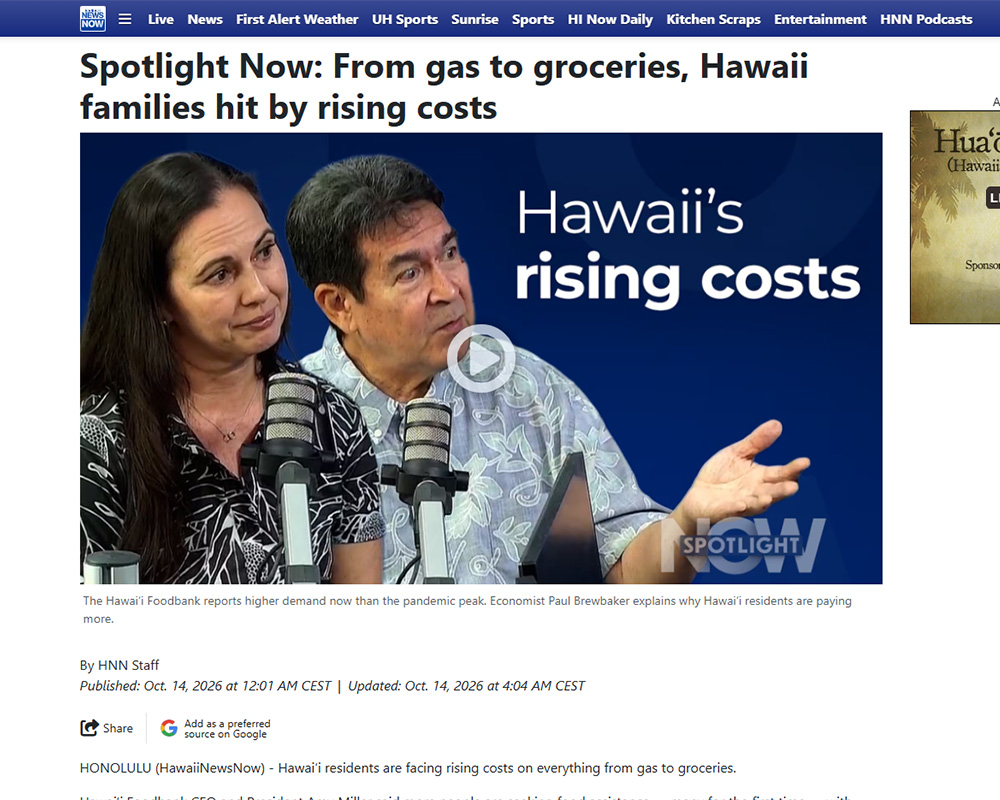
Hawaiʻi Foodbank CEO and President Amy Miller said more people are seeking food assistance — many for the first time — with demand now exceeding levels seen during the height of the pandemic.
Who is seeking help
Miller said about a third of Hawaiʻi families are food insecure, and many are working families.
“There’s not enough food for everybody to have a healthy lifestyle,” Miller said. “It’s working families. It’s kupuna on a fixed income. It’s probably people that you know and work with and see, your neighbors, everybody.”
Miller said the Foodbank distributed more than 26 million pounds of food in the fiscal year ending June 30, 2026. Prior to the pandemic, distribution was between 10 and 12 million pounds, rising to 22 million two years ago.
Disasters drive demand
Miller said disasters are a big part of demand. She cited Kona lows, two hurricanes, rain events and a government shutdown a year ago that created economic hardship.
“We have definitely seen demand go up every single time there’s disaster. Right now, on Kauaʻi last month, we distributed about three times as much food as we normally do, kind of across the state with the disasters,” Miller said. “Too many people are living right on the edge and just can’t afford to replace lost food.”
Supply shocks keep Hawaiʻi costs high
Economist Paul Brewbaker said Hawaiʻi residents are spending 50% more on groceries compared to two years ago.
He said a barrage of biological and policy shocks — like avian flu, the pandemic recovery, Maui wildfires, wars and tariffs — has pushed prices out of reach for many household budgets.
“It’s kind of a light switch,” he said. “There’s this whole global sort of disruption, uncertainty caused by this pattern of shock on the supply side of the market that even though ordinarily they should only create a transitory impulse of one time — no chickens, price of eggs go up, and we get chickens that don’t have avian flu, price of eggs go down — but they don’t go down.”
“It’s this sequence of things that have created this L-shaped upward jump in what households are spending at grocery stores,” Brewbaker added.
Charter amendment would create food security fund
During the general election, Honolulu voters will consider Charter Amendment 1, which would carve out one-half of 1% of existing real property tax revenue to create a food security fund.
Miller said the funds could be used by the city to invest in local food security, including grants for the Hawaiʻi Foodbank and similar organizations to purchase food from local farmers or direct support for families.
“Food insecurity is so highly correlated with these really negative health outcomes, like heart disease and diabetes and kidney disease and cancer. So we also may not be paying that bill today but we will start to pay that bill later on,” Miller said.
“I really believe the long-term benefits of that kind of investment, we will be seeing those for many years to come if we can make it happen,” she added.
Community Spotlight: Hawaii Pacific Health experts share what to know about screening
October is Breast Cancer Awareness Month, and Spotlight Now spoke with healthcare experts about the importance of regular breast cancer screenings.
Nurse practitioner Kelsey Hamano-Monma encourages women to be proactive in knowing their risk for breast cancer. She recommends to “ask your family members at your next reunion potluck,” since a family history with cancer may shape your provider’s preventative recommendations.
Karen Story, Director of Oncology Services at Hawaii Pacific Health, shares what she’s learned from her own experience. At 43, she was diagnosed with invasive lobular breast cancer despite staying current on screenings. She encourages women to “know your normal” and act quickly if they are experiencing symptoms. Reflecting on her journey, Story says, “I might be in a very different health situation if I hadn’t caught my cancer at an early stage…if something comes up, please speak up, get in front of your care teams. We got the tools to take care of you.”
For average-risk women, breast cancer screening starts at age 40. For more information and to schedule a screening appointment, visit hawaiipacifichealth.org/mammogram.